Better knowledge about drugs in wastewater: Measurements now cover 29 cities
The Danish Health Authority is publishing results from the national wastewater monitoring of drugs. The analysis was conducted by the Department of Forensic Medicine at Aarhus University. It now covers 29 wastewater treatment plants and includes measurements of fentanyl.

Read the report
- In 2026, the monitoring has been expanded to 29 wastewater treatment plants located in the following areas: Avedøre, Damhusåen, Egå, Ejby, Esbjerg, Fredericia, Herning, Hillerød, Hjørring, Holbæk, Horsens, Kolding, Køge, Lynette, Mariagerfjord, Marselisborg, Mosede, Måløv, Nordvest, Næstved, Ringsted, Slagelse, Søholt, Vejle, Viby, Åby, Aalborg,
- The monitoring covers alcohol, amphetamine, codeine, fentanyl, ketamine, cocaine, MDMA, methadone, methamphetamine, morphine, nicotine, oxycodone, THC and tramadol.
- The measurements are intended to help strengthen the knowledge base on the drug situation in Denmark and are anchored in the initiative Youth Without Opioids from October 2024.
Throughout 2025, researchers analysed wastewater from 29 Danish wastewater treatment plants.
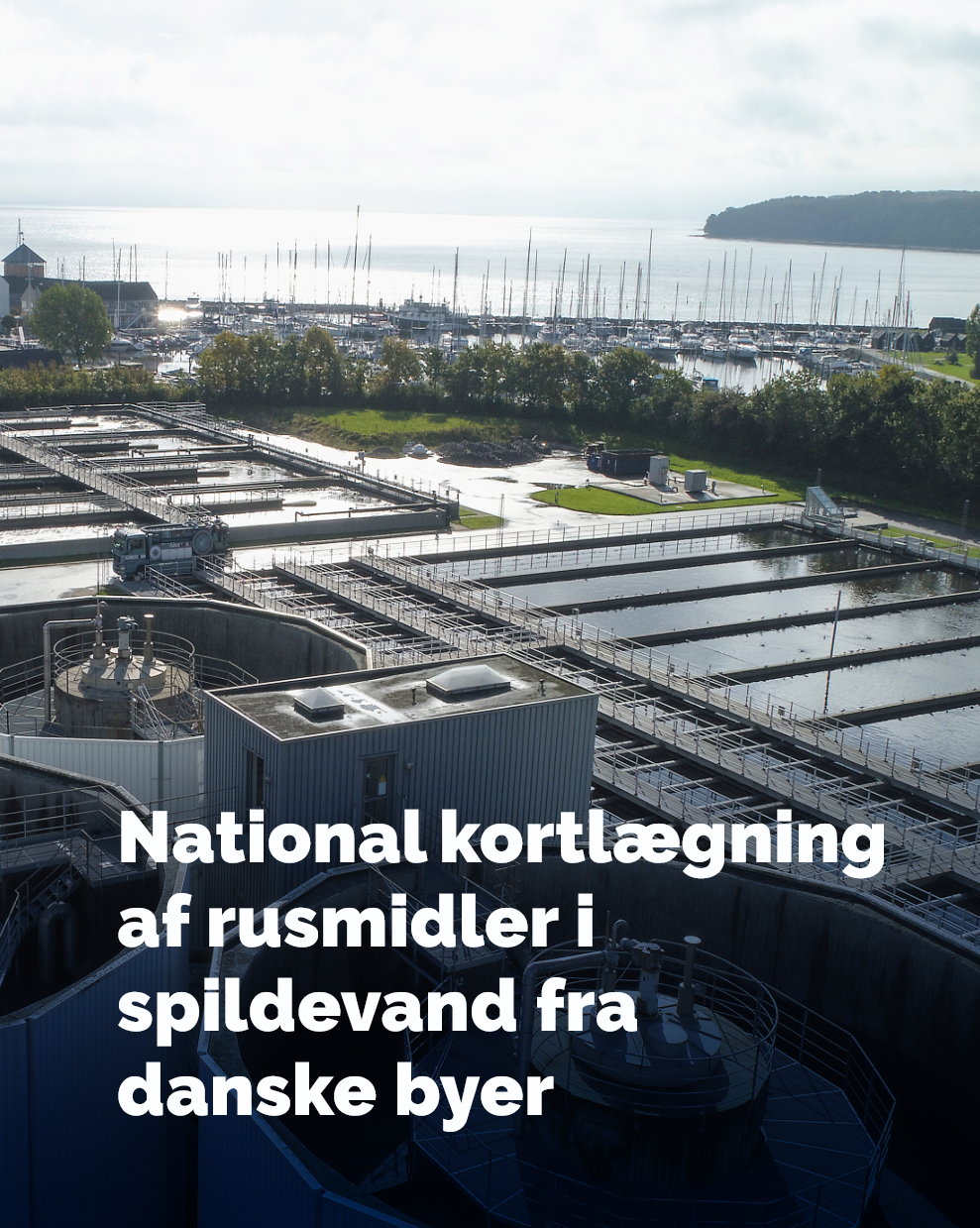
The wastewater reveals Danes’ consumption of substances including cocaine, opioids and alcohol, and the results can be seen in the report ’National kortlægning af rusmidler i spildevand fra danske byer’ (National Mapping of Drugs in Wastewater from Danish Cities).
“With this year’s report, we are now examining wastewater from areas that cover half of Denmark’s population. This gives us a very precise and comprehensive picture of the consumption of the most common drugs in Denmark,” says Christian Lindholst, Associate Professor and Head of the Department of Forensic Medicine at Aarhus University, who authored the report.
The illegal market is constantly evolving
The wastewater results are one of many elements in the national monitoring of the drug situation in Denmark and are intended to strengthen overall knowledge about drug intake in Denmark.
Among other things, the new report shows that:
There are differences in when during the week different substances are used. Cocaine, MDMA and alcohol are consumed approximately 2–3 times more often at weekends than on weekdays, while amphetamine, methamphetamine, ketamine, THC, nicotine and opioids are consumed more evenly throughout the week.
There are geographical differences in the amount of drugs consumed. Generally high levels of cocaine per 1,000 inhabitants and other stimulant drugs are observed in Copenhagen compared with other cities. By contrast, opioid levels are generally lower in Copenhagen and Aarhus than outside the major cities.
The measurements generally show low levels of fentanyl across the wastewater treatment plants, although one measurement point is notably high. The Danish Health Authority has therefore informed the relevant municipality and the police of this result. The Authority is closely monitoring the fentanyl measurements, also in light of the fact that this is the first time the substance has been measured in wastewater.
Several new substances have been found on the Danish market, including potent synthetic opioids (nitazenes) and cannabis products with added synthetic cannabinoids.
Cocaine is the most widespread stimulant drug in Denmark.
Approximately 30 percent of the analysed cocaine consists of unknown adulterants, which is a decrease compared with last year.
- The report shows that the illegal drug market is constantly evolving, and that people still cannot know for certain what they are consuming when they buy illegal drugs.
READ ALSO: Drug crime, drug seizures and the drug market
At the same time as the wastewater report, the Danish Health Authority is publishing an annual report describing seizures, charges, the concentration and content of drugs at street level, and new substances found in Denmark.
The annual report ‘Narkotikakriminalitet, narkotikabeslag og stofmarked’ (Drug Crime, Drug Seizures and the Drug Market) is published once a year and can be found on the Danish Health Authority’s website.
The purpose of the report is to provide continuously updated knowledge about charges and violations of drug legislation and the Road Traffic Act, the scale of seizures of illegal drugs, and the concentration and constituents of the substances traded on the Danish market.
The report contains new information about the drug market, including data from the Danish National Police, the Street-Level Initiative, the NPS project and the substances recommended in 2025 for inclusion in the executive order on psychoactive substances.
Contact
Head of Department Christian Lindholst
Aarhus University, Department of Forensic Medicine
Phone: +45 20 93 92 23
Email: [email protected]